28. Dorset Gardens Project Details: Understanding the Dorset Road Land Sale Bid
“Dorset Gardens” is showing up as the marketing name for an upcoming condominium on Dorset Road, in Singapore’s District 8. It is positioned around the Dorset Road area near Farrer Park MRT, which matters because location assumptions often drive buyer expectations on travel time, daily convenience, and the kind of tenant or owner profile the unit mix can attract.
Under the marketing wrapper, though, the more consequential story is tied to the government land sale (GLS) site on Dorset Road. The bid outcome, the consortium behind it, and the project’s high-level development envelope are the three anchors buyers should understand early, especially if you are trying to make sense of Dorset Gardens pricing signals later during launch.
Below, I break down what is known from the confirmed project context, how to interpret the land bid numbers without overreading them, and what to focus on when you are https://dorsetsgarden.com.sg reviewing any Dorset Gardens brochure, booking a Dorset Gardens book appointment, or planning a Dorset Gardens view showflat.
Dorset Gardens and the Dorset Road GLS site, what is confirmed
The most straightforward verified point is that Dorset Gardens is presented as an upcoming new condo branding for a project located on Dorset Road. The District 8 positioning and proximity to Farrer Park MRT are also consistent with public project reporting.
The land sale piece is not a side detail. It is the reason the market will keep referencing a specific dollar figure and a psf ppr metric when people talk about “how the pricing might look” for the eventual launch. When developers acquire a GLS site, the winning bid influences the internal cost base, financing structure, and the hurdle rate that then shapes how the project is priced when it opens for sales.
In this case, the Dorset Road site bid was reported as awarded in October 2025 for S$524.3 million, at about S$1,338 psf ppr. Those two numbers, especially the psf ppr figure, are what you will typically see buyers use as a shortcut to compare against other recent land acquisitions in nearby districts.
A common mistake is to take psf ppr as if it will translate directly into selling price psf. It does not work that cleanly. The land cost is only one component of the total development cost, and market pricing at launch is still influenced by the full set of variables including construction timing, interest rate assumptions, unit mix strategy, and buyer sentiment at the moment the sales gallery opens.
Still, the bid does provide a reality check: the project was purchased at a certain level of competition and market appetite, and that matters when you evaluate whether future Dorset Gardens pricing seems “aggressive” or “defensive” relative to the site’s acquisition benchmark.
Who is developing Dorset Gardens, and how the consortium is structured
The confirmed developer context is that the Dorset Road site was won by a consortium of UOL, Singapore Land Group (SingLand), and Kheng Leong Company.
One reported split states the JV shareholding as:
- UOL 60%
- SingLand 20%
- Kheng Leong 20%
That ownership breakdown is useful for buyers in two practical ways.
First, if you have experience reviewing UOL developments, you may already have a sense of how their marketing cadence and sales approach typically unfolds. Even if the marketing name is Dorset Gardens, the consortium’s coordination often shows up in the way the launch is packaged and the way buyers are directed toward brochure downloads, price list registrations, and appointments.
Second, JV structures matter because decision making can be split between partners, especially around unit mix, design direction, and launch strategy. You might not see those internal debates, but you can observe outcomes such as how strongly the project leans into direct developer pricing messaging, how the sales launch is staged, and how the showflat schedule is managed once bookings open.
One caution: a UOL annual report mentions acquisition of a Dorset Road residential site in January 2026 via a joint venture with Kheng Leong and CapitaLand Group. However, the context appears to refer to a separate or later project situation, so it should not be treated as confirmed alignment to the Dorset Gardens branding discussed elsewhere. In practice, when you are doing diligence, it is better to anchor on the Dorset Gardens marketing context and the consortium structure that has been directly tied to the Dorset Road GLS award reporting.
Project build envelope: what we know about lease and number of homes
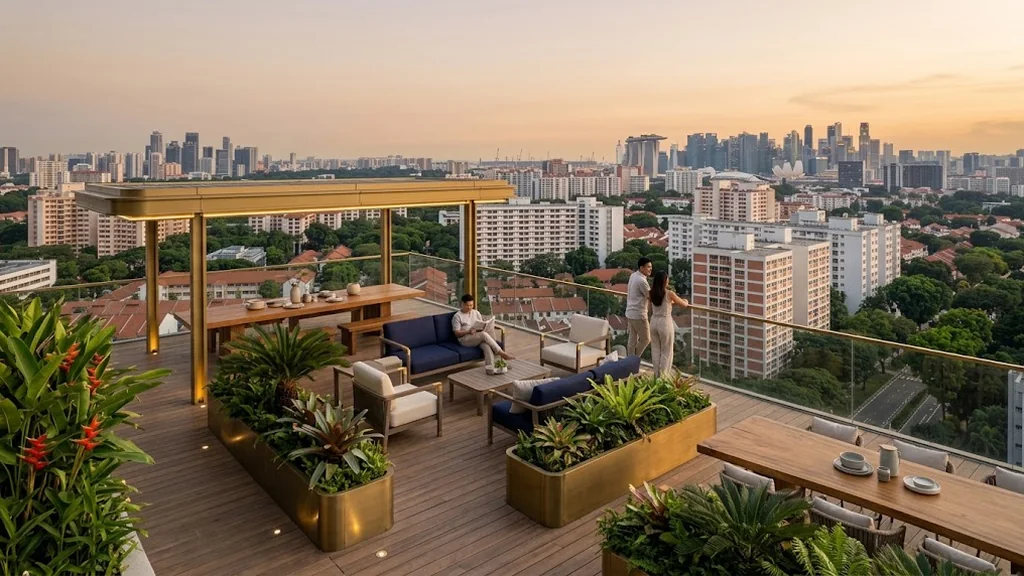
When you are trying to understand Dorset Gardens project details, you want the “shape” of the development. Verified public information describes the planned project as a 99-year leasehold condominium with about 428 homes across two 27-storey towers.
That matters more than it sounds, because the tower count and scale can influence how the market perceives supply timing and how developers may allocate higher-demand layouts.
It also matters when you think about how a new condo might feel on day one. For example, buyers often ask whether a project feels “tight” or “open” in the shared facilities context. We do not have verified details here on facilities, layout configuration, or communal features for Dorset Gardens, so I will not guess. But knowing you are likely dealing with two sizable towers helps you frame what to ask during a Dorset Gardens view showflat and what you should watch for in floor plan efficiency, corridor planning, lift landing flow, and sightlines.
The land bid number and why it gets repeated during launch talk
Let’s return to the Dorset Road GLS award: S$524.3 million at about S$1,338 psf ppr.
In buyer conversations, those figures tend to become shorthand for “how costly the land was,” and therefore “how high prices might be.” That is not irrational. Land acquisition at a certain psf ppr level sets a baseline constraint for the developer. But it is still a baseline, not a final determinant.
Here is the practical way to think about it from a purchaser’s perspective.
1) The psf ppr figure helps you compare land economics across sites, but it does not include construction escalation, interest rates, design changes, and the cost of financing over time. 2) Even if the land cost is high, the developer may still choose to keep launch pricing disciplined to manage absorption risk, especially if they expect competition or if overall market demand softens. 3) Conversely, even if land cost is moderate, launch pricing can still be aggressive if the developer believes buyer sentiment will support it.
That is why you should treat land bid metrics as “context,” not as a formula.
How marketing pages typically handle Dorset Gardens sales stages
One verified point is that public listing pages for Dorset Gardens / Dorset Road GLS advertise marketing actions like brochure downloads, price list registration, and showflat appointment booking. Importantly, these are described as marketing pages rather than official developer releases.
That distinction is not academic. It changes how you should interpret what you see.
A brochure download prompt does not necessarily confirm final specifications, and a price list registration page does not necessarily provide a complete, final pricing schedule in advance. It often signals that the developer or sales team is preparing a sales package, but not that all numbers are already locked and disclosed.
When you are planning a Dorset Gardens book appointment, it helps to go in with a checklist of what you will ask for before you make commitments. If you wait until the showflat viewing without having clarified the sales mechanics, you can lose time or end up comparing apples to oranges between different releases.
Here is a short practical checklist you can use when you engage a sales team for Dorset Gardens:
- Ask whether there is an officially issued price list for the specific unit mix you are targeting, and whether any “preview” figures differ from the formal schedule
- Confirm the unit types available for viewing at the showflat session you booked, so you know what is actually representative
- Request clarity on the sales timeline stages, especially what happens after price list registration
- Understand whether any payment schedule milestones are conditional on documents being issued or approvals being completed
- Ask for the key documents you should review before signing, so you can prepare financing and decision timing properly
This is the difference between collecting information and actually reducing decision risk.
Dorset Gardens pricing: what you can infer, and what you cannot
Because the verified context does not provide a final confirmed pricing schedule, the safest position is to avoid claiming specific numbers for Dorset Gardens pricing. Instead, you should think in terms of what is defensible from the known facts.
What you can infer:
- The project was acquired via a large GLS bid, and buyers will expect the eventual pricing narrative to rationalize around that land cost anchor.
- Any “direct developer price” messaging you see in marketing materials is likely to be framed around the developer’s internal cost base and sales strategy rather than just a pure market comparison.
What you cannot infer from verified information:
- The exact launch price per square foot
- The distribution of pricing across unit sizes
- Any guaranteed discount bands or promotional packages
- The exact start date for sales launch, based only on the confirmed context
So if you see headlines or social claims about exact pricing, treat them as unverified unless a final price list is issued through proper channels.
The trade-offs buyers should weigh for a 99-year leasehold project
Leasehold length is one of the first decision points for Singapore property buyers, even when the project is new and the marketing looks compelling. Here, the confirmed development plan is described as 99-year leasehold.
Trade-offs tend to show up in three areas:
First, long-term value expectations. Many owner-occupiers still look at a project’s lease in relation to their intended holding period. If you plan to hold for decades, lease becomes less “just a number” and more a driver of future resale expectations.
Second, buyer pool and liquidity. A leasehold property can still be liquid, but the buyer pool dynamics can shift depending on market sentiment and competing supply.
Third, how developers position the project in marketing. New launch projects often have a sales story focused on lifestyle, proximity, and unit design. But the lease length will still be part of the buyer’s mental math when comparing alternatives.
In a practical buying mindset, you should ask yourself a simple question before you spend time on floor plan decisions: “How do I feel about my plan if the resale market is less favorable than I expect?” That question applies regardless of whether you view a showflat and regardless of how attractive the finishes feel on a single visit.
Viewing strategy: how to use a showflat visit effectively
A Dorset Gardens view showflat is the moment people often fall into the trap of judging the entire project by one unit’s interior feel, one kitchen layout, and one design highlight. The lived-experience perspective is that showflats are curated and lighting is controlled. You need to judge beyond surface impressions.
Since verified context does not include unit-specific layout drawings, you still can use the viewing properly by focusing on the questions that reveal long-term livability. Even without getting into unverified details, you can evaluate:

- how storage is integrated, because storage tends to be where most households feel constraints over time
- how the corridor and living space transitions feel in practice, because that affects day-to-day movement
- how the bedroom sizes and adjacency work, because layout flow matters as families age or work-from-home changes
- how balcony or window positions affect natural light and ventilation feel, because those are daily comfort factors
The sales team may guide you toward what they want you to notice, so you should bring your own “must-check” lens.
The location factor near Farrer Park MRT, and why it changes expectations
The Dorset Gardens project context places it near Farrer Park MRT, in District 8. Location influences more than commuting.
It shapes:
- what kind of amenities you likely assume are nearby
- what kind of tenants might be attracted if you ever consider renting
- how you compare it against other new launches in your personal travel radius
When buyers discuss Dorset Gardens developer and project details, they often jump quickly to the developer name and number of towers, then move straight to pricing. But location changes the discussion because it affects whether the project is “easy to rent” or “easy to resell” later. You might not intend to rent, but liquidity matters.
If you are deciding whether to prioritize one unit over another within the same project, you should also consider how your future needs might change. A household that expects to stay close to employment hubs often values proximity higher than a household that plans to move after retirement.
What the land sale context suggests about timing and market positioning
Because the GLS award was reported in October 2025 and the acquisition reporting appears to happen around early 2026 in at least one UOL annual report context, the market has a reasonable basis to expect the project to be in preparation for eventual launch and sales stages later.
However, the verified context we have does not confirm a specific launch month. So instead of guessing, treat any “launch preview” registration prompts as indicators of sales readiness rather than hard commitments to exact launch dates.
The most reliable approach is to connect the marketing steps you see:
- brochure availability
- price list registration
- showflat appointment booking
Those usually appear in sequence when the sales package is being finalized. If one step opens while another remains unavailable, it often means internal documents or allocations are still being processed.
How to interpret consortium signals when comparing to other projects
Suppose you are comparing Dorset Gardens to another new condo in a nearby area. The consortium structure and land bid can matter in buyer decision-making, but in a non-mystical way.
A larger consortium with multiple partners often means:
- coordination across stakeholders
- potentially more checks in place for documentation and governance
- marketing strategy that reflects the broader group experience
That does not guarantee better unit quality, and it does not guarantee better pricing. It just changes the way a project tends to roll out.
The confirmed consortium here is UOL-led with SingLand and Kheng Leong, with one reported share split of 60/20/20. If you have previously bought a UOL project, you may be able to recognize how sales teams tend to communicate. If you have not, you can still use the consortium context by comparing how responsive they are during your brochure download and price list registration interactions, how they handle clarifications, and whether they provide consistent answers across staff.
Consistency is often more valuable than polished marketing.
Getting beyond the brochure: what to ask before you commit
If you only read a Dorset Gardens brochure when it arrives, you will miss the parts that affect decision risk. Even without verified unit specifications, you can still ask the right questions in a structured conversation.
Here are five questions worth asking in plain language, so you can get direct answers rather than vague reassurance:
- “Is this price list the final one for the units I am considering, or a preliminary set?”
- “Which unit type shown at the showflat corresponds most closely to the layout I want?”
- “If I register for the price list, what happens next, and what approvals or documentation are needed?”
- “Are there any restrictions on when I can book the unit or when I can exercise choice?”
- “What are the key leasehold-related considerations you highlight for buyers, given the 99-year leasehold plan?”
You are not trying to interrogate. You are trying to remove uncertainty.
What to watch for after the showflat: price list registration and unit allocation
Since verified context indicates that price list registration is part of the sales flow, the next buyer reality is how allocation works once registration starts.
Even when the sales story sounds straightforward, buyers should watch for:
- whether the unit types you want are available immediately or only later
- whether registration is tied to a specific unit selection window
- whether the pricing you see for preview materials is consistent with what is issued through the formal process
If you are comparing multiple developers, this matters because “time to get the unit type you want” can be as important as the unit price. A good deal on a less suitable unit can become a bad deal if you have to compromise on what you need.
The buyer’s bottom line: how to use verified facts without overcommitting
Dorset Gardens project details, as verified from public context, point to a real and meaningful development story: a Dorset Road GLS acquisition, a UOL-led consortium with SingLand and Kheng Leong, a plan described as 99-year leasehold with about 428 homes across two 27-storey towers, and a location near Farrer Park MRT in District 8.
Where buyers get into trouble is when they treat one data point as the whole answer. The winning bid does not automatically dictate launch pricing, and a brochure does not automatically equal final clarity. A showflat visit can help you feel the space, but it should not replace document-level diligence.
If you approach Dorset Gardens with that discipline, you are not trying to predict the entire future. You are building a grounded decision process around what is actually confirmed, and you are using the brochure download, price list registration, and showflat appointment booking steps to close the gaps in your understanding before money moves.
That is the most reliable way to turn “project details” into a decision you can live with, long after the sales gallery lights dim.